



Metal bending is a fundamental process in various industries, enabling manufacturers to create components with specific shapes and forms. Understanding the curving process for metals is crucial for achieving the desired results, whether for sheet metal, tubes, or other types of metal. The metal bending process encompasses several techniques, each tailored to different materials and applications. From manual methods to advanced automated machinery, knowing the right technique for bending metal is essential for ensuring both precision and efficiency.
The curving process for metals typically begins with selecting the right material for the job. Different metals, such as steel, aluminum, and copper, require different bending methods due to their varying properties. For example, softer metals like aluminum can be bent with less force, while harder metals like stainless steel may require more advanced techniques and equipment to achieve the same result.
In the metal bending process, the most common method for bending sheet metal is called air bending. Air bending involves using a punch and die to apply force to the metal, creating a bend at a specific angle. This method is versatile, as it can be used for a wide range of sheet thicknesses and materials. Air bending is especially useful for producing shallow bends or when the metal needs to retain its strength after the bending process. One key advantage of air bending is its simplicity and efficiency, making it a popular choice for many manufacturers.
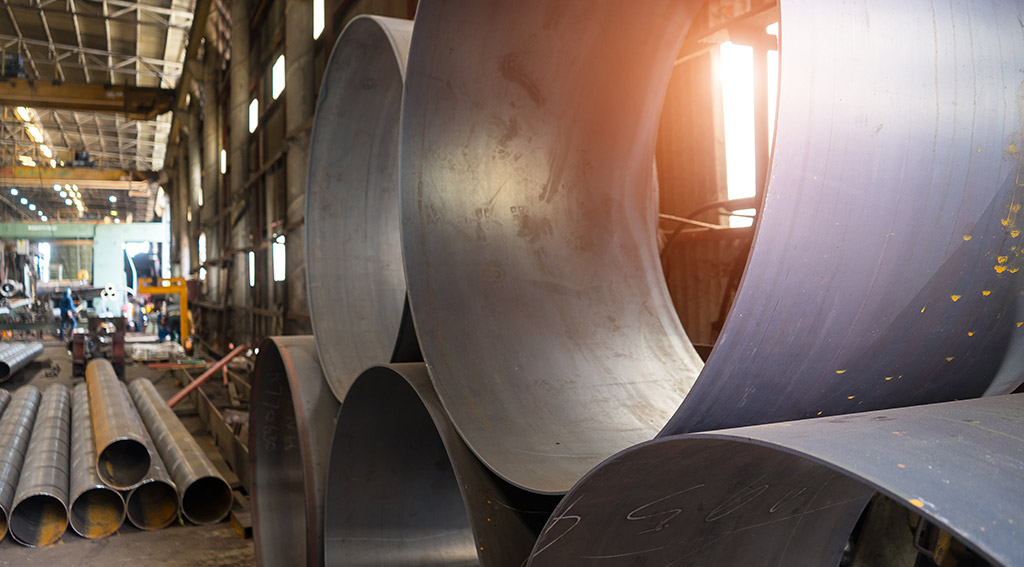
Another popular curving process for metals is roll bending, which is often used for producing cylindrical shapes or curves. In this technique, the metal is passed through a series of rollers that apply gradual pressure, allowing the metal to bend evenly along its length. Roll bending is particularly suitable for larger, longer pieces of metal, such as pipes and structural beams, that require smooth, consistent curves. This method is commonly used in industries like construction, automotive, and shipbuilding, where large quantities of curved metal are needed.
For more intricate shapes, sheet and tube bending methods like press brake bending are often employed. Press brake bending uses a press machine to apply force to the metal in a controlled manner. This technique allows for precise control over the bend’s angle and depth, making it ideal for more complex shapes and tighter tolerances. Press brake bending is especially useful in industries that require high-precision parts, such as aerospace, electronics, and automotive manufacturing.
Another variation of sheet and tube bending is rotary draw bending, which is commonly used for bending tubes and pipes. This method involves a rotating die that pulls the metal around a form, ensuring a smooth, accurate bend without causing any distortion or wrinkles. Rotary draw bending is particularly useful for creating bends with tight radii and smooth curves, making it a popular choice for applications in the automotive, aerospace, and oil and gas industries.
In conclusion, the metal bending process is a versatile and essential technique used in manufacturing various metal components. Whether using air bending, roll bending, press brake bending, or rotary draw bending, each method offers distinct advantages based on the material and application. By understanding the different curving process for metals options, manufacturers can choose the best technique to meet their production needs, ensuring both quality and efficiency in their operations.