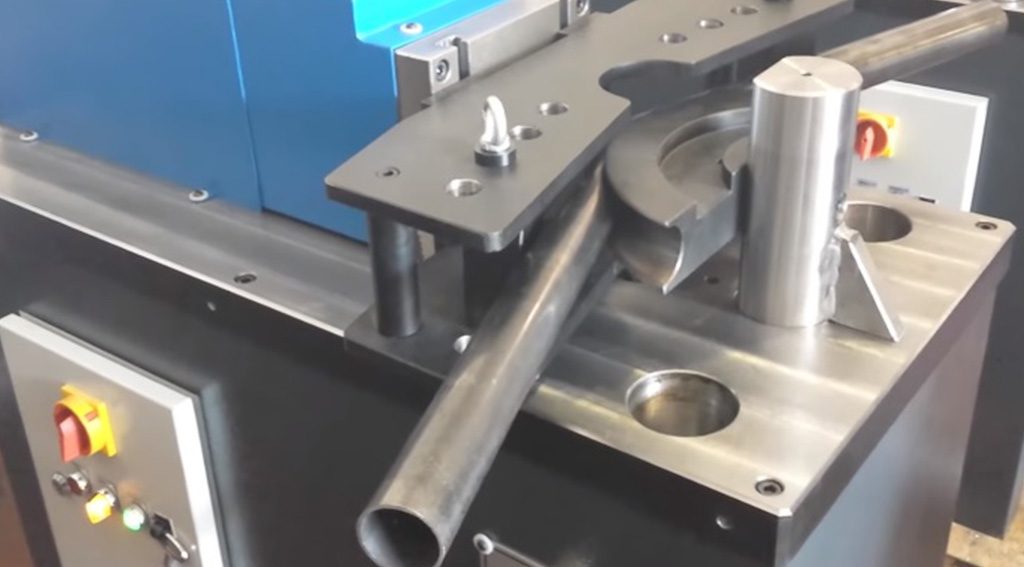




Bending profiles is a fundamental process in metalworking, allowing manufacturers to shape metal components into precise forms for various applications. This technique is widely used in industries such as construction, automotive, aerospace, and heavy machinery, where structural integrity and accuracy are essential. The ability to bend metal profiles efficiently ensures the production of durable and high-quality parts that meet industry standards.
There are several methods used in profile bending solutions, each tailored to different material types, thicknesses, and design requirements. One of the most common techniques is rotary draw bending, which provides precise control over the bending radius and is ideal for applications requiring tight curves. This method is frequently used in tube and pipe bending for automotive frames, handrails, and furniture manufacturing.
Another widely used approach is roll bending, which utilizes multiple rollers to gradually shape metal into curves and arcs. Roll bending is particularly effective for producing large-radius bends and is commonly applied in structural components, such as beams and support frames. Mandrel bending, on the other hand, incorporates a mandrel inside the tube to prevent deformation and maintain the integrity of the inner diameter, making it suitable for aerospace and HVAC applications.
Hydraulic profile forming is an advanced bending method that uses hydraulic pressure to shape metal with high precision and force. This technique is especially useful for handling heavy-duty materials, such as steel and aluminum, in applications requiring high-strength components. CNC-controlled hydraulic bending machines have further improved the accuracy and repeatability of this process, making it a preferred choice for industries that demand consistent quality.
The applications of bending profiles extend to various industrial sectors, including manufacturing, transportation, and architecture. In the construction industry, bent metal profiles are used for creating curved structures, such as bridges, domes, and support beams. In transportation, profile bending is essential for producing automotive chassis, railway tracks, and shipbuilding components. The aerospace sector also relies on precise bending techniques to manufacture aircraft components that require optimal strength-to-weight ratios.
Selecting the appropriate profile bending solution depends on multiple factors, such as material type, bend radius, and production volume. Manufacturers must consider the mechanical properties of the metal, including ductility and tensile strength, to achieve the desired shape without compromising the material’s integrity. Additionally, advancements in computer-aided design (CAD) and simulation technology have enabled engineers to optimize bending parameters for increased efficiency and cost-effectiveness.
As metalworking continues to evolve, innovative bending techniques and machinery are shaping the future of manufacturing. The integration of automation, robotics, and artificial intelligence in profile bending solutions is enhancing precision, reducing production time, and minimizing material waste. By utilizing modern hydraulic profile forming methods and state-of-the-art equipment, manufacturers can achieve superior results and meet the growing demands of the industry.