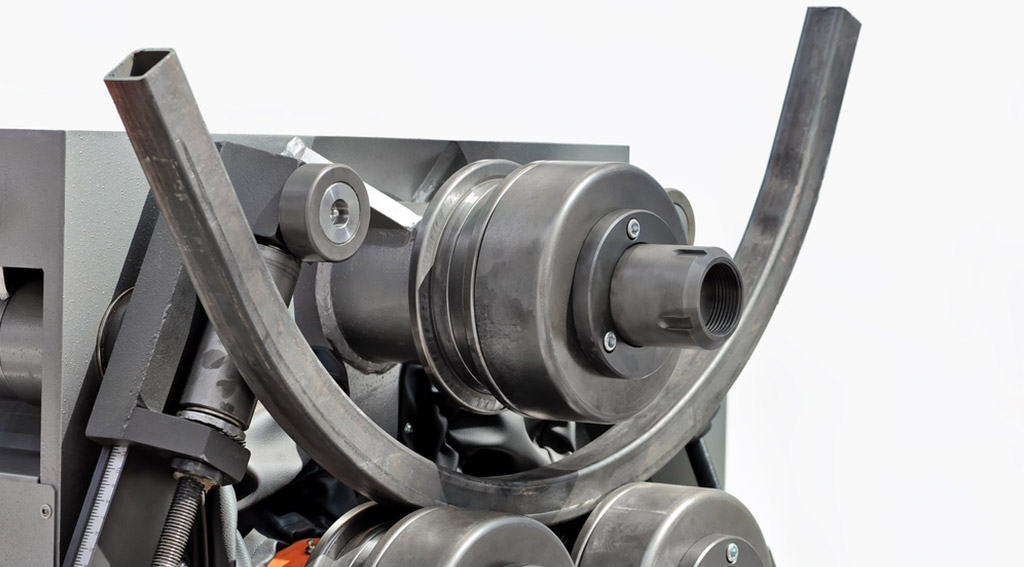
Profile bending is a fundamental process in the metalworking industry, used to shape metal profiles, pipes, and tubes into desired curves and angles. This technique plays a crucial role in various industries, including construction, automotive, shipbuilding, and manufacturing, by enabling the production of structural components such as frames, railings, and curved beams. The process of profile bending involves specialized equipment designed to ensure accuracy and consistency in shaping metal profiles for industrial applications.
A profile bending machine functions by using multiple rollers to gradually bend and shape a metal profile. The process starts with feeding the metal profile between the rollers, which apply controlled pressure to achieve the required curvature. Different configurations of profile bending machines, including three-roll and four-roll models, offer specific advantages depending on the application. These machines allow for precise manipulation of metal profiles, ensuring high-quality results for various structural and decorative applications.
The versatility of profile bending makes it an essential technique in multiple industries. In construction, it is used for creating arches, window frames, and stair railings. The automotive and aerospace sectors rely on profile bending for manufacturing roll cages, chassis components, and aerodynamic structures. Shipbuilding utilizes this process for forming curved sections of hulls and support structures. Additionally, profile bending is crucial for producing pipelines and tubing used in industrial and infrastructure projects, as well as in decorative metalwork for architectural designs.
Investing in metal profile forming technology provides several advantages, including enhanced precision, as modern machines offer advanced control over the bending process, ensuring uniformity and accuracy in the final product. Increased efficiency is another benefit, as automated systems reduce manual labor, streamline production, and enhance overall workflow. These machines are highly versatile, handling various metal profiles, including steel, aluminum, and stainless steel, making them suitable for different projects. They also contribute to cost-effective production by minimizing material waste and reducing errors, leading to significant savings in manufacturing operations. Customization is another key advantage, as machines can be adjusted to create different shapes and sizes, allowing for tailored solutions across industries.
Profile bending is a vital process in metal fabrication, offering precision, efficiency, and versatility for shaping metal profiles and pipes. Whether for construction, automotive, or industrial applications, this technique enables the creation of high-quality components with consistent results. Investing in reliable industrial profile shaping equipment ensures smooth operations and long-term benefits for businesses requiring metal bending solutions.